How do you compare leasing, buying, and building a practice from the ground up?
Leasing, buying an existing building, and building from the ground up are three different ways to house a practice, and they trade off against each other on four things: how much capital and time each requires up front, how much control and return each offers over the long run, and how well each fits where the practice is headed. Leasing asks the least up front and offers the most flexibility but builds no ownership; buying an existing building requires a down payment and turns rent into equity; building from the ground up offers the most control over the space but takes the most time, capital, and risk. There is no single right answer — the best choice depends on the practice's capital, timeline, growth plan, and how long the owner expects to stay.
This article lays out what each path requires and returns, the questions that decide between them, and how to think about the comparison without forcing a one-size answer.
Which options does your market even offer?
Before weighing the tradeoffs, it is worth knowing that the market may have already narrowed the choices. Which of the three paths are realistically available depends on how developed the area is.
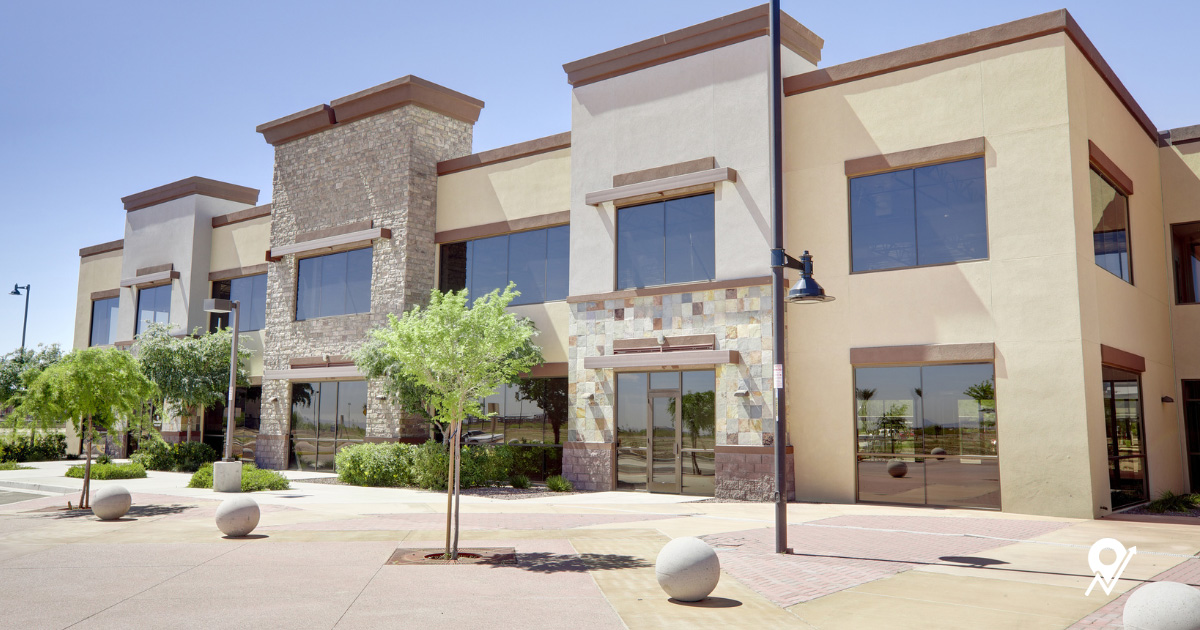
In newer growth markets — fast-developing suburbs and corridors — there are often few second-generation buildings: spaces previously built out for a tenant that a practice could repurpose rather than starting from a bare shell. In those markets the realistic options may come down to leasing in a new development or building from the ground up on raw land, with little existing inventory to buy and renovate. In more mature markets the opposite tends to be true: there is a deeper stock of established buildings well-suited to repurposing for dental or medical use, which makes buying and renovating an existing building a real option alongside leasing.
So the first question is not always "which path is best" — it is "which paths does this market actually offer." That can settle part of the comparison before the tradeoffs do.
What does each path require and return?
Leasing asks the least up front — typically a deposit and the cost of the buildout, often offset by a tenant improvement allowance from the landlord. It offers the most flexibility: when the term ends, the practice can renew, relocate, or change course. Two practical realities shape the leasing experience. A lease is only as good as the landlord and the neighbors — you have limited control over who owns the building and who else occupies it. But leasing also makes better use of shared elements like common areas, parking, and building systems, and spreading those costs across multiple tenants can make the per-tenant cost more efficient than carrying a whole building alone. The other tradeoff is that rent is an expense that builds no ownership, and the lease terms, set by the landlord, shape the practice's costs and its position at a future sale.
Buying an existing building requires a down payment (conventionally around 20 percent, though SBA-backed loans for owner-occupied practice real estate can require as little as 10 percent) and commits the practice to a mortgage. In return, the payment that used to be rent now services a loan and builds equity, and the owner controls the building. The return on that ownership comes from several sources at once — rent no longer paid, principal paid down, possible appreciation, and tax treatment — which is covered in detail in our article on the real ROI of buying your practice building . Buying existing also tends to be faster than building, and its costs are more discoverable: the building exists and can be inspected before you commit, so fewer surprises hide in the walls. The tradeoff is fit — you are choosing from what is on the market, which often means a building that is too big, too small, or carries architectural quirks the practice has to work around.
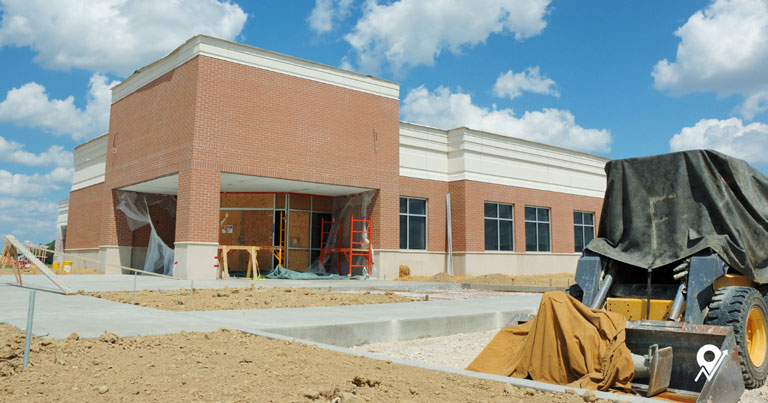
Building from the ground up offers the most control — the space is designed for the practice from scratch — but it asks the most: land, the largest capital commitment, and the longest timeline, with construction commonly running 9 to 18 months on top of land acquisition and a permitting-and-entitlement front end that varies widely by location. What you get for that cost and time is fit: you choose every component — the building style, the ceiling heights, the window sizes, how the building sits on the lot, the layout — so the result can be a more efficient building shaped to the practice, without the quirks of an existing space to design around. The risk is on the other side. Ground-up carries the most execution risk, and costs can surface during construction rather than before it. For owners with a specific long-term vision and the capital and patience to match, it can produce exactly the right building; for most, the time and risk are the deciding factors.
How do the timelines compare?
Time is one of the clearest differences between the three, and it drives when an owner has to start.
Leasing or buying an existing building generally calls for starting the process about 18 months before a current lease expires; building from the ground up calls for 24 months or more, because of the land, the approvals, and the longer construction. A buildout in existing or leased space commonly runs about 6 to 9 months; ground-up construction runs longer. (Our articles on relocation timing and buildout timelines cover this in detail.) If the practice is up against a lease expiration, the timeline alone can rule out building from scratch.
How does each affect the practice's costs?
All three paths produce a facility cost, and the measure that compares them on equal footing is occupancy cost — the share of the practice's collections that goes to the building, generally healthy in the 5 to 8 percent range for dental and medical practices.
A lease, a mortgage, or a ground-up build all have to land within what the practice can sustain. A path that looks attractive on control or ownership but pushes occupancy cost well above the healthy range commits the practice to a facility it may struggle to support — and that becomes a problem at a future sale, when a lender or buyer measures the facility cost against collections. (Our article on occupancy cost covers how to calculate and read this.) The cost test applies to all three options equally.
Which path fits where the practice is headed?
Beyond the money and the timeline, each path commits the practice to a space for years, so the fit with the practice's growth plan matters as much as the financials.
This is where the size and character of the space come in. A practice with a clear, modeled growth plan — adding providers, moving upmarket, expanding services — may be better served by buying or building a space sized and laid out for that future, rather than leasing a space it will outgrow. But a practice whose direction is less settled may be better served by the flexibility of a lease, rather than committing capital to a building sized for a future that is still uncertain. The risk to avoid on the ownership side is building or buying more space than the practice's plan will actually fill — a facility sized to a goal that does not materialize can cost the owner both in carrying cost and at transition. (Our articles on sizing a practice's space and on weaving real estate and growth goals together cover this.)
What questions decide between them?
The choice usually comes down to a handful of questions about the practice and the owner:
- How much capital is available up front, and is it better deployed in real estate or in the practice itself?
- How long does the owner expect to stay? Much of ownership's return builds over years; a short horizon favors leasing.
- How settled is the growth plan? A clear, modeled plan supports owning or building; an uncertain one favors the flexibility of a lease.
- What does the timeline allow? A near lease expiration can rule out building and may favor leasing or buying existing space.
- Can the practice's collections support the facility cost of each option within the healthy occupancy-cost range?
- How much does control over the space matter relative to flexibility and lower up-front commitment?
No single answer fits every practice. The same owner might reasonably lease early in a practice's life, buy once the practice and its direction are established, and consider building only with a specific long-term vision and the capital to support it.
The short version
Leasing, buying, and building trade off capital, time, control, and fit. Leasing asks the least up front and keeps the most flexibility but builds no ownership. Buying turns rent into equity and gives control, for a down payment and a mortgage. Building from the ground up offers the most control but takes the most time, capital, and risk. The right choice depends on the practice's available capital, how long the owner plans to stay, how settled the growth plan is, what the timeline allows, and whether collections support the facility cost — measured the same way across all three. For most owners the answer changes over the life of the practice, which is why it is worth modeling the three side by side rather than defaulting to one.
NextSite Consulting is an independent, fee-based real estate advisory firm for dental and medical practice owners. We model leasing, buying, and building side by side — the costs, returns, and fit of each — so the decision rests on the numbers rather than a default. We work on a flat-fee basis. This article is general information, not tax, legal, or financial advice.

Jason Price — Founder, NextSite Consulting
Jason is a Georgia-licensed real estate broker and the founder of NextSite Consulting, an independent, flat-fee healthcare real estate advisory firm helping medical and dental practice owners decide whether to lease, buy, or build. Based in Roswell, GA.
Connect on LinkedIn