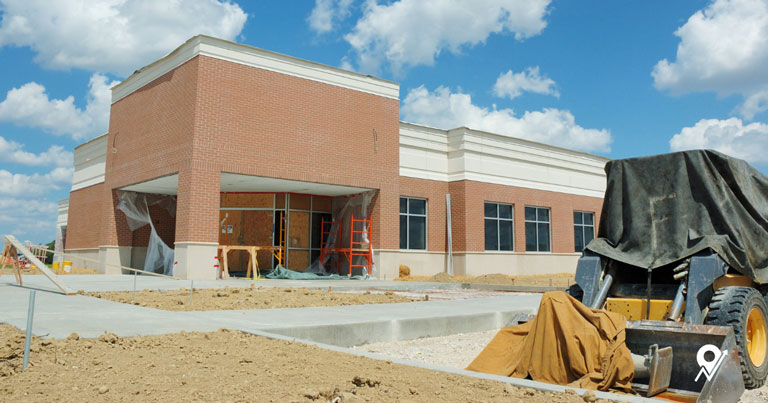
Ground-Up Development for Medical Practices: Is Custom Building Your Best Investment?
The vision of a custom-built medical or dental facility is incredibly appealing to many doctors. Imagine a space perfectly tailored to your workflow, embodying your unique brand, and optimized for patient experience. Yet, this dream often comes with a significant caveat: the daunting reality of potential delays, unforeseen costs, and inherent construction complexity. So, when does undertaking a ground-up development truly outweigh these challenges and become your practice's smartest move?
Ground-up development undeniably offers unmatched flexibility, allowing for a facility meticulously designed to your unique needs. But achieving this level of customization demands more than just a blueprint; it requires a clear strategic vision, robust financial backing, and the unwavering support of experienced professionals.
When is Ground-Up Development Ideal?
This path often proves most strategic for practices that:
- Have a clear, long-term growth plan that existing spaces simply cannot accommodate.
- Require highly specialized layouts or complex technology integration unique to their services.
- Seek maximum control over their brand identity and aim to create a distinctive patient experience.
- Possess stable financials and have access to significant capital for investment.
- Operate in new growth markets where suitable vacant building inventory is scarce or non-existent. In such areas, finding an existing building that perfectly fits your needs can be nearly impossible, making custom construction the most viable and strategic option for establishing a presence and securing your future.
The Powerful Advantages of Custom Development:
Choosing to build from the ground up unlocks several key benefits:
- Purpose-built workflow optimization: Design a space that perfectly aligns with your practice’s operational flow, maximizing efficiency and minimizing wasted time.
- Future-proofing for expansion or technology upgrades: Build in the necessary infrastructure and flexible space to accommodate anticipated growth and technological advancements for years to come.
- Stronger branding and patient experience: Create a facility that fully embodies your brand, leaving a lasting impression and delivering an exceptional patient experience from the moment they step inside.
- Potential for superior long-term real estate value: A well-designed, purpose-built facility in a strategic location can accrue significant real estate value over time.
Navigating the Trade-Offs:
While the advantages are compelling, it's crucial to understand the associated trade-offs:
- Higher upfront capital requirements: Custom construction typically involves a more significant initial investment compared to leasing or purchasing existing spaces.
- Longer timelines: Expect a development process that usually spans 12–24 months from conception to completion.
- Risk of cost overruns or delays: Construction projects can sometimes encounter unforeseen challenges that lead to increased costs or schedule setbacks.
- Temporary business disruption: If you are relocating from an existing practice, there may be a period of temporary business disruption during the transition. Mitigation strategies, like phased moves, are crucial for minimizing this impact.
Crucial Considerations for Your Ground-Up Project:
- Strategic Clarity: Before breaking ground, have a crystal-clear vision for your practice's long-term goals, service lines, and patient volume. This foresight guides every single design decision and investment.
- Site Selection: The right location is paramount. Carefully consider factors like visibility, patient access, ample parking, local zoning regulations, and future development plans in the surrounding area.
Assembling Your Expert Team:
Successfully navigating a ground-up build demands a skilled and cohesive team. It's critical to assemble the right professionals from the outset:
- An experienced architect specializing in healthcare facilities.
- A reliable general contractor with a proven track record in commercial construction.
- A dedicated project manager (or NextSite Consulting's specialized expertise, providing oversight and coordination).
Understanding Financing Considerations:
Be prepared for the unique aspects of financing a ground-up project, which often involves:
- Construction loans with phased disbursements: Funds are released at different stages of the project, tied to construction milestones.
- Different terms compared to traditional real estate mortgages: These loans often have variable rates and conversion clauses upon completion.
Building isn’t the right path for every practice. However, when a custom facility aligns perfectly with your growth trajectory and capital strategy, it can prove to be your single best investment. At NextSite, we specialize in helping you clearly model this complex decision, providing comprehensive comparisons against leasing and purchasing existing facilities. Our Financial Impact Study meticulously examines:
- The relationship between construction costs and their long-term value impact on both your practice and the underlying real estate.
- The precise timeline to reach breakeven and achieve positive cash flow from your new facility.
- The projected impact of the new building on your practice's overall valuation in 5, 10, and 15 years.
If you're considering custom construction, don't go it alone. Let's walk through all the numbers together before you commit to a design—or a significant loan. Schedule a complimentary consultation with NextSite today to explore how ground-up development can strategically position your practice for long-term success.

Jason Price — Founder, NextSite Consulting
Jason is a Georgia-licensed real estate broker and the founder of NextSite Consulting, an independent, flat-fee healthcare real estate advisory firm helping medical and dental practice owners decide whether to lease, buy, or build. Based in Roswell, GA.
Connect on LinkedIn